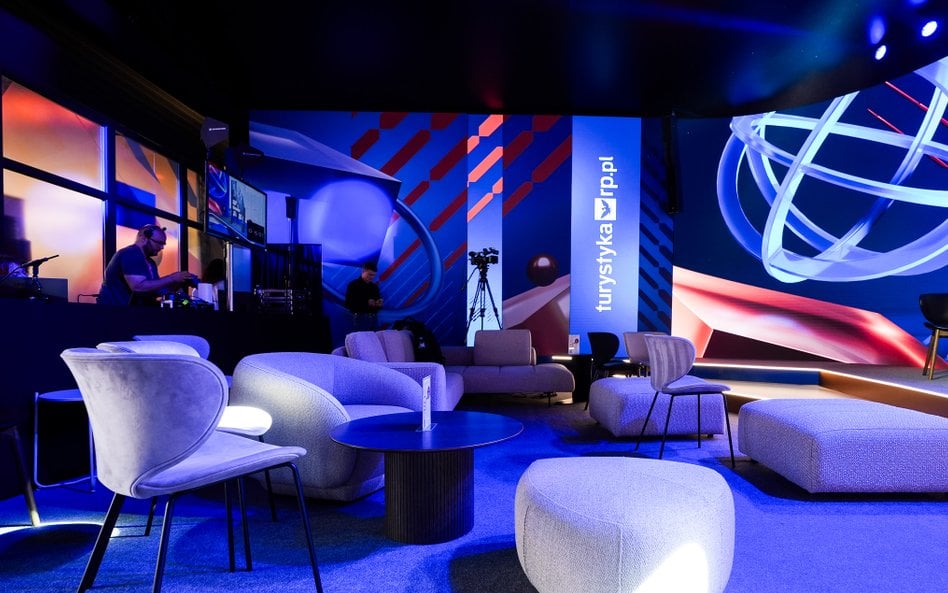
On the second day of the Economic Forum, Rzeczpospolita continues its series of debates dedicated to the most pressing challenges facing the economy and the state. On Wednesday, 9 September, the main stage will bring together representatives from government administration, business, academia, and civil society organisations.
Price elasticity vs consumer value
Wednesday, 9 September, 12:15–13:15 | Rzeczpospolita lounge
One of the central topics experts will address is the reality of the Polish digital market across telecommunications and e-commerce. Rapidly shifting costs of doing business in Poland alongside rising consumer expectations require businesses to continuously adapt their offerings to market conditions. At the same time, high standards of protecting Polish consumers, transparent rules, and freedom of choice remain foundational to both the telecommunications sector (where revenue reached PLN 46 billion in 2025, up 3.5 per cent year-on-year, maintaining a GDP share of around 1.2 per cent) and e-commerce. Can these two objectives be reconciled? How can conditions be created that allow enterprises to maintain their investment capacity and enhance service quality (telecom capital expenditure reached PLN 12.7 billion in 2025, up 32.8 per cent year-on-year) while ensuring consumers retain full control over their purchasing decisions?
During the debate entitled ‘Price Elasticity vs Consumer Value: Reconciling Customer Protection with Investment and Digital Market Competitiveness’, representatives from state administration, regulatory bodies, and business will discuss how to build a modern consumer services market in Poland based on trust, competition, and the flexibility needed to respond to changing economic conditions.
The debate will be moderated by Artur Osiecki, editor at Rzeczpospolita. Panellists include Przemysław Kuna, President of the Office of Electronic Communications (UKE); Daniel Mańkowski, Vice-President of the Office of Competition and Consumer Protection (UOKiK); Krzysztof Pstrong, Management Board Member and Director General of the Polish Chamber of Electronic Communications (PIKE); Krystian Olchowik, Director of the GovTech Department at the Ministry of Digital Affairs; and legal counsel Witold Chomiczewski, Representative for Legislation at the Chamber of Digital Economy (IGE).
The Drug is reimbursed, the patient is eligible. So why are they still waiting for treatment?
Wednesday, 9 September, 11:00–12:00 | Rzeczpospolita lounge
623 days—that was the longest reported wait time in June to start treatment under one of the drug programmes for Crohn’s disease. For active ankylosing spondylitis, it was 556 days. These figures do not refer to patients awaiting diagnosis or reimbursement approval for a new therapy, but to patients for whom treatment is already available under an established drug programme.
This represents one of the paradoxes of the healthcare system. The state reimburses the therapy, the doctor confirms the patient needs it, and the patient meets all programme criteria—yet they are still not always able to begin treatment. According to ONE VOICE 2026 data based on information from the National Health Fund (NFZ), roughly 2,185 people were waiting in June to be enrolled across just eight analysed drug programmes in gastroenterology, dermatology, and rheumatology. As many as 755 of them were urgent cases.
The issue extends far beyond medicine. Delayed treatment can mean additional hospitalisations, sick leave, loss of physical function, and reduced working capacity. A saving in one part of the system can thus lead to expenditure elsewhere—borne by the NFZ, the Social Insurance Institution (ZUS), employers, the broader economy, and patients themselves.
What, then, costs the state more: effective therapy initiated in a timely manner, or the consequences of unmanaged disease? And who is responsible for a patient who qualifies for treatment but cannot find a facility equipped to commence it?
These questions will be addressed by participants in the debate ‘Autoimmune Diseases: Investment in Treatment or Cost to the Economy?’. The discussion aims to provide not only a diagnosis of the problem, but also concrete answers on what needs to change in the funding, organisation, and monitoring of drug programmes.
The debate will be moderated by Krzysztof Jakubiak. Panel members include dr Norbert Pietrykowski, Member of the Sejm and Member of the Health Committee; dr Piotr Artur Winciunas, Head Physician at ZUS; dr n. med. Magdalena Władysiuk, President of CEESTAHC; dr hab. n. med. Michał Jerzy Łodyga, National Consultant in Gastroenterology; prof. dr hab. n. med. Brygida Kwiatkowska, Deputy Clinical Director at the National Institute of Geriatrics, Rheumatology and Rehabilitation; dr hab. n. med. Zbigniew Żuber UAFM Professor; Jakub Szulc, Vice-President of the NFZ; Agata Młynarska, Founder and President of Fundacja Zdrowie Bez Tabu; Marek Lichota, President of the Appetite for Life Association (org. Stowarzyszenie “Apetyt na Życie”); and Małgorzata Ufnal, Founder and President of Fundacja Rheuma Active.
How healthy citizens can drive the Polish economy
Wednesday, 9 September, 14:50–15:50 | Rzeczpospolita lounge
Poland ranks as the world’s 20th largest economy and the 6th largest in the European Union, yet healthcare spending remains below the OECD and EU averages, accompanied by low system efficiency. Poland also has one of the shortest working lives in the EU—36 years (seventh lowest), compared to the EU average of 37.5 years. In this context, public health is no longer strictly a matter of social policy; it directly challenges economic competitiveness, productivity, and the sustainability of public finances. Can Poland currently afford not to invest in health?
Every decision to forgo investment in health returns to the budget later and at a higher cost. ZUS disability benefits cost approximately PLN 57 billion in 2024—equivalent to 1.6 per cent of GDP—while GDP loss due to premature mortality accounts for PLN 115 billion annually.
Does the current funding model meet the actual needs of an ageing society? Should health be prioritised when competing against other public expenditures such as defence, education, or infrastructure? How can greater civic co-responsibility for health be fostered when public understanding of system operation and funding remains limited? These issues will be explored during the debate ‘How healthy citizens can drive the Polish economy’ in the Rzeczpospolita lounge. Panellists include dr Piotr Bromber from the Centre of Postgraduate Medical Education; Izabela Grabowska, Director of the Social Surveys Department at Statistics Poland (GUS); Igor Grzesiak, Vice-President of the Institute for Patients’ Rights and Health Education; Łukasz Kozłowski, Chief Economist at the Federation of Polish Entrepreneurs (FPP); and prof. Tomasz Sobierajski, sociologist at the University of Warsaw.
Demographics: The Generational Economy
Wednesday, 9 September, 16:05–17:05 | Main Stage, Hotel Gołębiewski
Poland stands on the brink of a profound demographic shift that could become one of the national economy’s most severe challenges in the coming decades. Panellists in the session ‘Demographics: Generational Economy. A New Social Contract for the 21st-Century Economy’ will examine its ramifications for the labour market, public finances, pension systems, and healthcare.
The scale of the challenge is vast. According to an experimental simulation by Statistics Poland (GUS) from 2025, if fertility remains at the 2024 rate (TFR 1.10), Poland’s population could fall to just 28.4 million by 2060. This is 2.5 million lower than predicted in the official 2023 forecast scenario. Some projections indicate that Poland’s population could drop by as much as 30 per cent by the end of the 21st century.
A shrinking working-age population means mounting competition for talent, growing pressure on pensions and healthcare, and an urgent need to identify new drivers of growth. These could include higher productivity, technological innovation, extended working lives for older employees, and a well-designed migration policy. Demographics is therefore no longer merely a social issue—it is a critical factor shaping the future of business and public finance.
Will automation and artificial intelligence be able to offset, even partially, the shrinking workforce? What kind of migration policy does Poland need, and, most crucially, can adverse fertility trends be reversed?
These questions will be addressed by panel speakers: dr Liwiusz Laska, President of ZUS; dr hab. Marek Cierpiał-Wolan, President of Statistics Poland (GUS); dr hab. Agnieszka Chłoń-Domińczak, Professor at SGH Warsaw School of Economics and Vice-President for Research; Victoria Tian, Country President at Novartis Poland; Sylwia Piekarska, Director of Public & Government Affairs at AstraZeneca Pharma Poland; and Anna Papka, Impact Director at McDonald’s Poland.
How to improve the effectiveness of screening programmes in Poland?
Wednesday, 9 September, 17:15–18:15 | Rzeczpospolita lounge
Poland continues to develop tools supporting preventive care, yet women’s participation rates in screening programmes remain well below expectations and lag significantly behind figures achieved in many European countries. According to National Health Fund data as of 1 September 2026, only 32.7 per cent of women eligible for free mammograms had taken advantage of the screening.
Today, the bottleneck is no longer a lack of preventive tools. The primary challenge is leveraging them more effectively and aligning efforts across different stakeholders within the healthcare system. What is at stake is raising the still inadequate uptake of preventive health checks among Polish women.
Digital communication offers significant opportunities, allowing information about screening to reach women in a more direct and personalised manner. Added to this are new technologies and data assets already present within the system whose potential remains underutilised.
How can these elements be integrated to make preventive care more effective? This question will be central to the debate ‘How to improve the effectiveness of screening programmes in Poland?’.
Panel members include Deputy Minister of Health Tomasz Maciejewski; Michał Dzięgielewski, Representative of the President of the NFZ; Joanna Wicha, Member of the Sejm (Nowa Lewica); Jolanta Zięba-Gzik, Member of the Sejm (Polskie Stronnictwo Ludowe); Tomasz Zieliński, Vice-President of the Federation of Healthcare Employers' Associations – Zielona Góra Accord (org. Federacja Związków Pracodawców Ochrony Zdrowia Porozumienie Zielonogórskie); and Anna Kupiecka, President of Fundacja Onko-Cafe.