In recent years, health has become a central element of Poland’s economic debate. Are we finally beginning to treat healthcare expenditure as an investment in the country’s development?
Marcin Bodio: Absolutely. The mindset is beginning to change. Today, health is no longer solely a medical or social issue; it has become a central pillar of the economic debate. Over the past few decades, Poland has made enormous economic progress. We are currently the sixth-largest economy in the European Union and one of the fastest-growing, with our gross domestic product having already surpassed the one-trillion-dollar mark.
If we wish to maintain this rapid rate of growth, we must invest in its foundation: the health of our society. Public health is, in fact, one of the most vital factors. It is encouraging that we are increasingly treating healthcare expenditure as an investment rather than merely a cost. Ultimately, it is an investment in productivity, competitiveness and human capital.
A healthy person remains in the workforce for longer, is less likely to require hospitalisation and participates more fully in the country’s economic life. Just as we invest in road infrastructure, so too must we invest in health. Without a healthy population, it will be difficult to sustain the country’s dynamic pace of development.
Given negative demographic trends, preventative care and access to modern treatments take on particular significance, enabling citizens to remain in good health for as long as possible. How quickly can we expect to see a return on such investments?
Monika Klaus: I believe this depends primarily on the specific therapeutic area. There are certainly fields where the return on investment is exceptionally rapid. A prime example is the preventative vaccines included in the compulsory immunisation schedule, such as the rotavirus jab. When we compare the costs of hospitalising children with the public sector's expenditure on purchasing vaccines, it becomes clear that such an investment pays for itself very quickly – as early as the second or third year following its introduction.
It is also worth highlighting the innovative cancer therapies used in the early stages of the disease, when a stage-one or stage-two diagnosis is made. This type of treatment is typically strictly time-limited, most often lasting around 12 months. It can yield excellent, rapid results; in many patients, it leads to what is known as a ‘complete response’. These patients can then return to normal life and work, bringing tangible benefits to both the economy and the social care system.
Naturally, the situation is more complex when cancer is diagnosed at a later stage. In such cases, treatment may take considerably longer, but regardless, we owe it to patients to save their lives by every means available.
We have a duty to do so, but can we afford it? This brings us back to square one: is it a cost, or is it an investment?
MB: In my view, the question should not be whether it is a cost or an investment, but whether we can afford not to invest in health. The costs of inaction and underinvestment in Polish healthcare are, after all, enormous – estimated at over PLN 115 billion a year. This also translates into more than 140,000 preventable deaths annually. Interestingly, yet alarmingly, the EU’s average rate of preventable deaths is half that of Poland's.
In public debate, we readily accept that expenditure in certain areas constitutes an investment, even if the return will only materialise years down the line. A prime example is the space sector. Recently, at a ceremony marking the establishment of the European Space Agency’s Warsaw centre, Finance Minister Andrzej Domański emphasised that every euro invested in this sector yields a return of 6 euros. He noted that we will invest in these technologies because they build our future and foster innovation.
I would like us to apply exactly the same logic to healthcare. When we look at modern therapies solely through the lens of their unit price, we see only the immediate cost we must bear here and now. However, by taking a broader view, we can recognise the enormous, measurable value they bring to the economy, a fact confirmed by hard data. A few months ago, the WifOR Institute published a report showing that every euro invested in innovative medicines in Poland generates a 9-euro return for the economy. For preventative care, every euro invested yields a return of around 14 euros, whilst adult vaccinations provide an extraordinary 12-fold return on investment.
We should therefore not assess modern therapies solely on their purchase price, but above all on the value they bring to patients, wider society and the Polish economy.
However, this raises the issue of limited resources. The Polish healthcare system is under financial pressure. Under such circumstances, how can we strike a balance between the growing needs of patients and the state’s actual financial capabilities?
MB: First and foremost, we must accept that in an ageing society like Poland, coupled with the rising prevalence of chronic diseases, healthcare needs – and consequently the costs of meeting them – will continue to rise regardless of the decisions we make. It is therefore crucial to create a healthcare funding model that is predictable and keeps pace with the country’s dynamic economic development.
Currently, one of the most serious systemic challenges is the funding mechanism based on the so-called ‘n-2 rule’. This stipulates that the baseline for calculating minimum healthcare expenditure in any given year is the GDP figure from two years prior. We are the only country in the world to apply such a model, and notably, no other sector in Poland is subject to a similar mechanism. In practice, this means that funding levels react with a two-year delay to changes in both the economy and patients’ actual needs. These needs arise here and now, whilst adequate funding arrives belatedly – often too late.
The second challenge is a lack of stability and predictability. It is difficult to plan the development of a modern healthcare system with a horizon of just one fiscal year. As with the energy and infrastructure sectors, we need a clear, long-term vision alongside a stable financial plan to bring it to fruition.
So, returning to the balance you mentioned: in my view, it should not rely on constantly managing shortages, but rather on creating a systemic framework that ensures stable funding and directs resources to where they deliver the greatest value for patients.
Despite all these difficulties, access to innovative therapies in Poland is gradually improving – or at least, that is what the reimbursement lists suggest. But does the inclusion of a particular medicine on this list automatically mean it is genuinely available to patients?
MK: We do face certain challenges here. In the case of the so-called ‘pharmacy list’ – prescription medicines dispensed in pharmacies – the situation is relatively straightforward. As soon as a reimbursement decision comes into force, the patient receives a prescription from their doctor and can have it dispensed at a pharmacy. There are virtually no delays in this area.
The situation is entirely different for drug programmes, namely innovative therapies administered in hospital settings. Here, the time from a reimbursement decision coming into force until the first patient actually receives treatment can range from four to as many as six months.
What is the reason for this delay?
MK: It stems mainly from the fact that launching a completely new drug programme involving new medical technology requires the National Health Fund (NFZ) to carry out numerous administrative procedures. The Fund must first draw up detailed criteria for medical facilities applying to provide the service in question, before carrying out the process of contracting these centres.
Unfortunately, these procedures are incredibly time-consuming, and patients with rare or oncological conditions simply do not have that kind of time. As a country, we should therefore strive to simplify them: firstly, by shortening the time taken to contract centres, and secondly, by streamlining the patient pathway.
This is an extremely important issue. Even if a particular centre already holds a signed contract and is authorised to administer a specific therapy, the patient must first be referred there. Meanwhile, in Poland, patients still often find themselves shuttled between various facilities before finally being referred to a centre running the specific drug programme where they can receive modern treatment.
Let us now take a slightly broader, European perspective. In recent years, there has been much talk within the European Union about building the bloc’s competitiveness and strategic autonomy. What role does the life sciences sector have to play in both geopolitical and economic terms?
MB: Today, there can be no strong economy without a robust life sciences sector. It is an industry that directly impacts citizens’ health security, attracts significant foreign investment and creates highly specialised, well-paid jobs. Across the European Union as a whole, this sector generates over 10 per cent of GDP and provides employment for nearly 30 million people.
At the same time, Europe faces a serious challenge. Until recently, it was the undisputed global leader in pharmaceutical innovation, but its position is clearly weakening. A decade or so ago, around 40 per cent of global expenditure on pharmaceutical research and innovation was channelled into our continent. Today, this share has fallen to just 31 per cent. New investments and clinical trial projects are increasingly bypassing Europe in favour of other regions, primarily the United States and Asia.
It could be argued that countries and regions no longer compete solely on the basis of individual innovations or products; rather, entire innovation ecosystems are competing with one another. Success is determined by stable and predictable regulations, collaborative relationships between public administration and business, the scale of investment allocated to development projects and, crucially, operational efficiency – such as the speed at which clinical trials are launched and conducted.
If Europe wishes to remain globally competitive with the United States and Asia, it must urgently create conditions conducive to both attracting and retaining strategic investment on our continent.
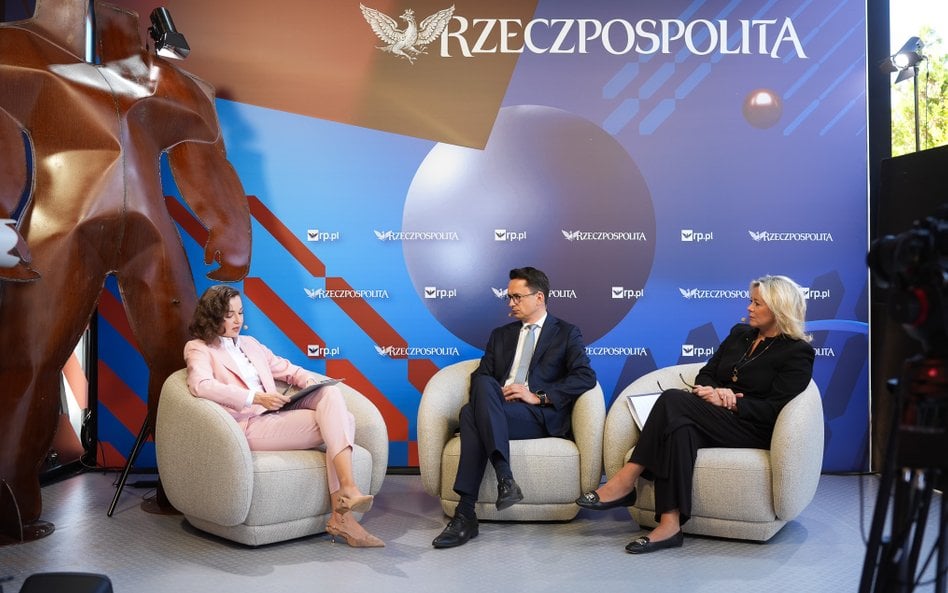
Monika Klaus, Director of Pharmacoeconomics and Medicines Policy at MSD Polska (right), and Marcin Bodio, Director of Health Policy and Communications at MSD Polska. The interview was conducted by Dominika Pietrzyk.